
|
You are only seeing a fraction of my work. If you want to see it all join my Patreon page at https://www.patreon.com/itsmetoo If you are already a supporter, go to the Table Of Contents on my Patreon and click the proper link to get the new password. |
Captioned Images Series: Collateral
Created: 02/25/2026
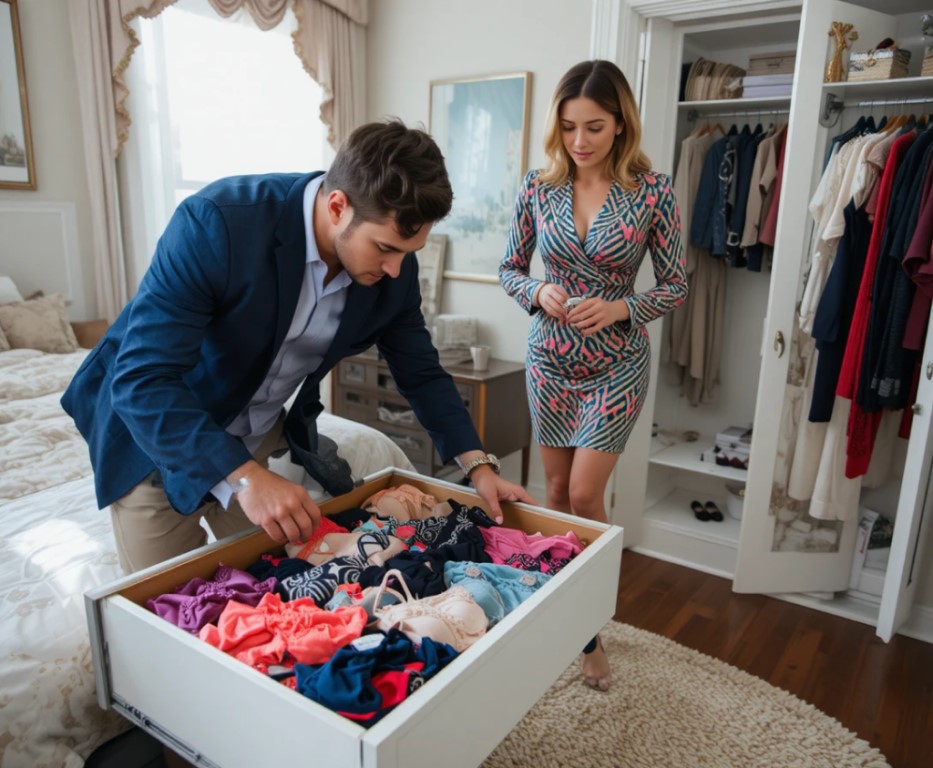
Felicity stared at the letter from the bank, the numbers blurring together. Three months behind on her car payment. The tow notice had been stapled to her door that morning, a cruel joke taped beside the holiday decorations she hadn't yet taken down.
She knew exactly who to call.
Simon had been her older brother's best friend since childhood, which made him almost family—close enough to trust, distant enough to feel comfortable asking for favors. They'd grown up together, attended the same schools, shared holidays and funerals. When her brother moved across the country, Simon had somehow become her emergency contact, her designated driver, her occasional dinner companion when loneliness crept in.
He answered on the third ring, his voice warm and familiar. "Felicity. It's been too long."
She cut straight to the chase. No point in small talk when her car was at stake.
Simon listened without interrupting. When she finished, there was a long pause—the kind of silence that held weight.
"I can help you," he said finally. "But I need something as collateral."
Felicity felt a flicker of unease, quickly suppressed. It was a reasonable request. He'd be lending her nearly four thousand dollars. Of course he'd want assurance she'd pay it back.
"Whatever you need," she said. "I can give you—"
"I'll stop by tomorrow to pick it up," he interrupted. "Don't go anywhere."
The next afternoon, Felicity heard his knock. She opened the door to find Simon standing in her doorway, hands in his pockets, wearing that easy smile she'd known since she was twelve years old.
"Hey," she said, stepping aside. "Come in. I have everything ready."
She'd gathered her jewelry box—the gold necklace her grandmother had given her, the diamond studs she'd bought herself after landing her first real job, a few sentimental pieces that meant more to her than their actual worth. She'd also pulled together some electronics, her tablet, her camera. Enough value to cover the loan, she figured.
Simon walked inside, looking around her apartment with casual interest. His eyes traced the bookshelves, the photographs on the walls, the small details that made the space hers.
"So," Felicity said, gesturing toward the coffee table where she'd arranged her things. "I figured—"
But Simon wasn't looking at the jewelry. He was looking at her bedroom door, slightly ajar, revealing a glimpse of her closet.
"Actually," he said, his voice strangely flat, "I'll take those things from in there."
He gestured toward her bedroom.
Felicity felt the first stirrings of wrongness. "My jewelry is right here. Everything's already—"
"I know what I want."
It wasn't a request anymore.
Simon walked past her, pushing the bedroom door open wider. Felicity followed, her heart beginning to race. This wasn't right. This wasn't what they'd agreed to.
Simon opened her closet, running his fingers along the hanging clothes. Her dresses, her coats, her blouses. Then he moved to her dresser drawers, flipping through them with methodical precision.
"What are you doing?" Felicity's voice came out smaller than she intended.
He didn't answer. He pulled out a lace teddy she'd bought years ago for a relationship that had long since ended. A silk robe. A pair of silk pajamas she'd forgotten she owned. He examined them as if assessing their value, then folded them with surprising care and set them aside.
"Simon, stop." She heard herself say it, but the words felt hollow. He'd paid for her car. He'd paid for her silence, apparently, for her inability to refuse him because she needed him too much.
He found a shopping bag from an upscale lingerie store— Felicity's occasional indulgence, her private luxury—and began filling it with her things. The silk, the lace, the delicate fabrics that had made her feel beautiful in moments of intimacy she thought she'd left behind.
"These will do nicely," he said, finally looking at her. His expression was calm, satisfied. "Consider our debt settled."
He walked past her, bag in hand, and was gone before Felicity could form another word.
Weeks passed. Felicity told no one. What would she say? She'd asked for money, and he'd taken what he wanted. The transaction had been, technically, voluntary—she'd agreed to his terms.
But she found herself checking the locks more often. She stopped answering when he called. When her brother mentioned that Simon had asked about her, she changed the subject.
The worst part wasn't the loss of her things. The worst part was the realization that she'd let it happen—that her vulnerability had made her compliant, that her need had silenced her voice.
She started locking her bedroom door at night.
And when she finally saved enough to buy back her things—contacting Simon through a mutual friend, paying triple what he'd lent her—she discovered that he'd already sold them. The silk pajamas, the lace teddy, the silk robe—all of it gone to strangers.
Felicity didn't call him again. Some debts, she realized, couldn't be repaid. Some collateral cost more than money.
Years later, when Felicity finally told her brother what had happened, he went silent for a long time.
"Why didn't you tell me?" he asked finally.
Felicity stared out the window at the city lights. "Because I was ashamed. Because I let it happen. Because I didn't know how to explain that someone I trusted—who I'd known my whole life—could look at me and see only what he wanted to take."
Her brother wanted to confront Simon, to make him pay in some way. Felicity stopped him. She didn't want revenge. She wanted something harder: to move forward, to rebuild the parts of herself that had learned to shrink when someone with power demanded more than she could give.
She'd learned a hard lesson about the language of loans and collateral, about how vulnerability could be read as permission, about the weight of owing someone something.
But she'd also learned this: some debts are worth defaulting on.
And sometimes, the only way to settle what you owe yourself is to stop keeping score altogether.
The End.
Made with PicLumen Generator